Short answer: When you submit a loan request on Personal-Loan.com, our lead-network partner looks for a lender willing to review it. If one accepts, you usually go to that lender’s website to see its offer. Lenders may check your credit, and by submitting you agree that lenders and marketing partners may call, text and email you.
A loan request is the form you fill in to ask lenders whether they will offer you a personal loan. It isn’t a loan application with any one lender yet, and it isn’t an approval. This page walks through each stage, from the questions on the form to the offer you can accept or refuse, so you know what you’re agreeing to before you click submit.
Personal-Loan.com is a free referral service, not a lender; we may be paid by lenders in our network. We don’t see lenders’ decisions, set rates or fund loans.
What is a loan request on Personal-Loan.com?
A loan request is one form that passes your details to lenders in a network, not to a single bank. Personal-Loan.com runs as a lead generator, a site that collects borrowers’ requests and passes them to lenders, which may pay for them. The form on our loan request page is provided by our lead-network partner, ZeroParallel, and its disclosures name LendYou.com, LLC as the network that sends your information on. Both say they aren’t lenders and don’t make credit decisions. You can ask for $100 to $35,000, and each lender decides whether to make an offer and on what terms.
What information does the form ask for?
The form asks for identity, contact, income and bank details, because lenders need them to decide and to pay out a loan. On the form we checked in November 2026, the questions were:

- The loan: amount and purpose (debt consolidation, credit card payoff, car repair, medical bills, home improvement, moving, emergency, major purchase or other).
- Contact: ZIP code, street address, phone number, name and email. The form texts a 5-digit code to confirm your phone.
- Identity: date of birth and Social Security number.
- Bank account: bank name and state, routing number, account number, and whether it’s checking or savings.
- Income: whether you’re paid from a job or benefits, your employer, net monthly income, how often you’re paid and your next payday.
- Credit: a rough self-rating, from “great (700+)” to “poor (500 and below)”.
Enter only true details. A lender verifies them later, and a mismatch can end the process. The page on personal loan requirements explains what lenders look for in each answer.
Why does the form ask for my bank account?
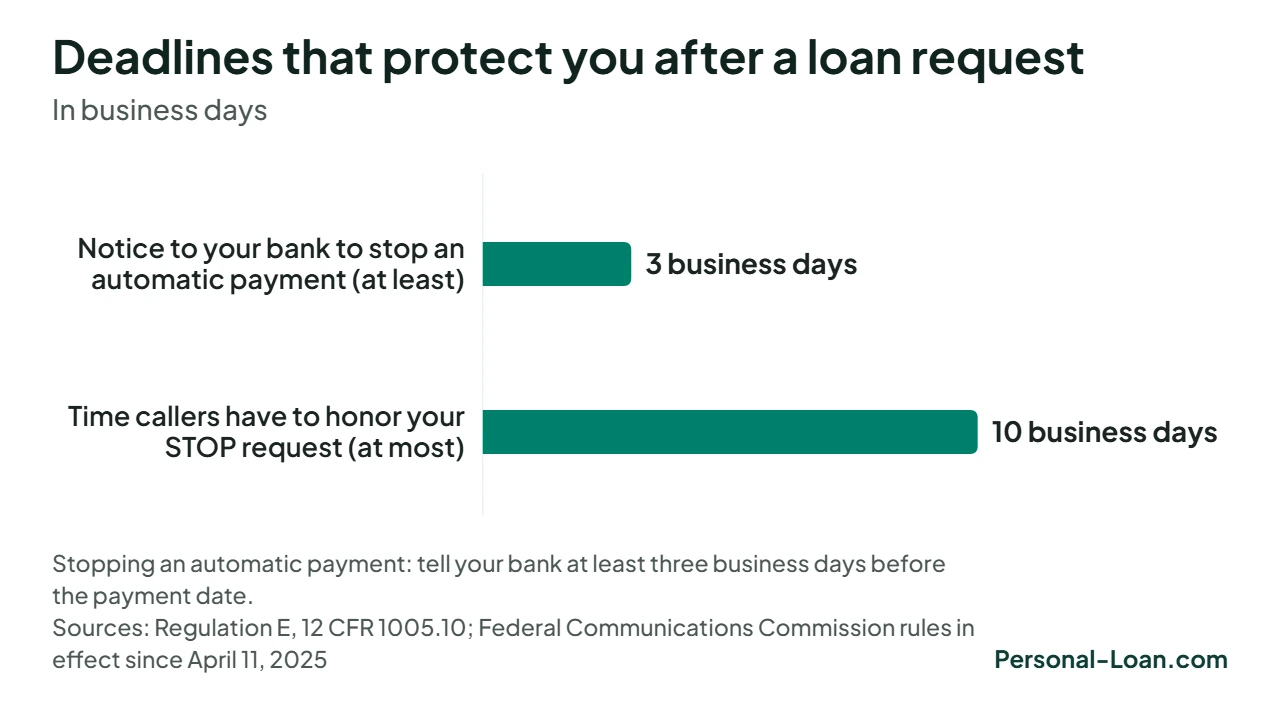
Lenders use your account to send the loan money and, often, to set up repayments. Paying by automatic debit is usually your choice, not a condition of the loan. Under Regulation E, a lender can’t make an extension of credit depend on your agreeing to repay by preauthorized electronic transfers, outside a few exceptions such as overdraft lines (12 CFR 1005.10(e)). If you do set up automatic payments, the same rule lets you stop one by telling your bank at least three business days before the payment date. Some lenders give a small autopay discount, so weigh that against the control you give up.
What happens right after I click submit?
The network looks for a lender willing to review your request, which can take a few minutes. While it searches, the form asks you to stay on the page. Lenders typically review a request one after another until one accepts it, so in most cases you’re matched with one lender rather than shown a list of offers side by side.
If a lender accepts your request, you’re usually sent to that lender’s website. There you may be asked to confirm details, upload documents or sign in, and the lender shows its offer. If no lender is found for the amount you asked for, the form tells you. You can try a smaller amount, or look at the other options further down this page.
What the law says: Before you’re bound by a loan, the federal Truth in Lending Act requires the lender to disclose the APR, the finance charge, the amount financed and the payment schedule. These are the Truth in Lending disclosures. Read them on the lender’s site, not on ours. Nothing you’ve done on Personal-Loan.com obliges you to accept.
Will submitting a request affect my credit score?
It depends on the type of credit check each lender runs. By submitting the form, you authorize lenders that receive your request to get your consumer report under the Fair Credit Reporting Act, and the form says not all of them will. The CFPB says a soft inquiry doesn’t affect your credit scores and is visible only to you. A hard inquiry can lower them, because most scoring models look at how recently and how often you apply for credit (CFPB, last reviewed September 5, 2025). Ask the lender which type it uses before you finish its application. The page on the credit score you need for a personal loan shows how your score affects the rate.
Who will contact me after I submit?
Expect calls, texts and emails, and not only from lenders. By clicking “Agree and submit”, you consent to marketing calls and texts from LendYou and its marketing partners at the number you give, including calls made with automatic dialing systems, even if your number is on the National Do Not Call Registry. The form also states that this consent isn’t required to buy anything.
The form’s partner list, as we read it in November 2026, runs to roughly 90 names. Besides lenders, it includes debt-relief companies, insurance and coverage marketers, and services aimed at seniors. Your information may reach any of them, and each one handles it under its own privacy policy. If you don’t want this kind of contact, don’t submit the form; apply directly with a bank or credit union instead.
How do I stop the calls and texts?
You can withdraw your consent at any time, in any reasonable way, and callers must honor it quickly. Under Federal Communications Commission rules in effect since April 11, 2025, you can revoke consent to autodialed calls and texts by any reasonable means. Replying “STOP”, “quit”, “cancel” or “unsubscribe” to a text counts. Callers must honor the request within 10 business days. The Federal Trade Commission says that once you ask a company not to call you, it has to stop.
- Reply STOP to each text sender.
- Tell each caller, “Put me on your do-not-call list,” and note the date and the company’s name.
- Use the unsubscribe link in each marketing email.
- Report calls that continue after your request at the FTC’s DoNotCall.gov.
To ask what Personal-Loan.com holds about you, or to have it deleted, see our privacy policy. Information already sent to lenders and partners has to be handled with each company directly.
What should I check before accepting an offer?
Check the APR, the total cost and the lender’s license before you sign anything. The annual percentage rate (APR) includes interest and most fees, so it’s the number to compare. Also look for an origination fee taken out of the loan, which means you receive less than you borrow.
- Total repaid: run the amount, rate, term and fee through the personal loan calculator to see the monthly payment and total interest.
- State limits: most states cap the interest licensed lenders can charge; the rate caps by state table shows yours.
- License: check the lender with your state’s financial regulator or on NMLS Consumer Access, the state licensing database many regulators use.
- Arbitration: look for an arbitration clause. The request form’s own terms include mandatory arbitration, and many loan contracts do too.
- Military borrowers: if you’re a covered servicemember or dependent, the Military Lending Act caps your Military APR at 36%.
Compare the offer with at least one other source before you accept, such as a credit union loan or an offer from another lender. If the price is too high, the right move may be to wait or borrow less.
How do I spot a fake lender or loan scam?
A lender that guarantees approval or asks for money before you get the loan is a scam. The Federal Trade Commission says it’s illegal for companies doing business by phone to promise you a loan and ask you to pay for it before they deliver (FTC). Hang up and stop replying if a caller:
- says you’re approved and asks for a fee, insurance or a deposit first;
- wants payment by gift card, wire transfer, cryptocurrency or a payment app;
- says they’re calling “from Personal-Loan.com” to collect a fee. We don’t make loans or collect money from borrowers.
A real lender deducts its fees from the loan or adds them to your balance, and shows them in the written disclosures.
What if I don’t get a loan offer?
If no lender accepts your request, you can’t see why, because Personal-Loan.com doesn’t receive lenders’ reasons. A lender that turns down an application you completed with it must send you an adverse action notice with the main reasons or tell you how to ask for them. From there you have a few options:
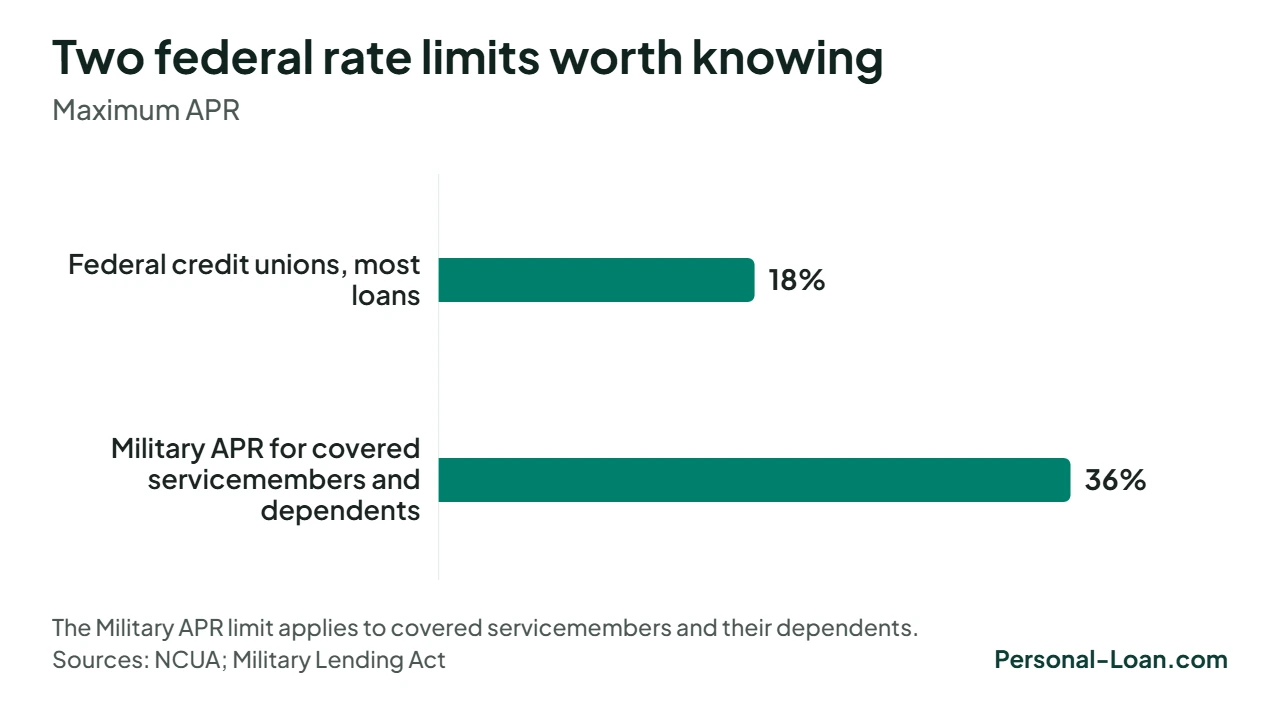
- Ask a local credit union about a small personal loan. Federal credit unions are limited to 18% APR on most loans (NCUA).
- Ask your creditors for a payment plan or a hardship program before borrowing to pay them.
- Lower the amount you ask for, or add a co-signer if the lender allows one.
- Talk to a nonprofit credit counselor if the debt is already hard to manage.
How a loan request works, step by step
| Stage | What happens | What you control |
|---|---|---|
| 1. Fill in the form | You give the amount, purpose, contact, identity, bank and income details | Ask only for what you need; enter accurate details |
| 2. Consent and submit | You authorize credit checks and agree to calls, texts and emails from LendYou and its partners | Read the consent text; you don’t have to submit |
| 3. Network search | Lenders review your request, usually one after another | Stay on the page while it searches |
| 4. Lender’s site | If a lender accepts, you finish its application, which may include a hard credit check | Ask which credit check it uses; check its state license |
| 5. Offer and disclosures | The lender shows the APR, fees, payment and total cost | Compare, decline, or accept; autopay is optional |
| 6. Afterward | Marketing calls, texts and emails may follow | Reply STOP, ask to be put on do-not-call lists, unsubscribe |
Loan request FAQs
Is Personal-Loan.com a lender?
No. Personal-Loan.com is a free referral service that passes your request to a lead network, and lenders in that network decide whether to make an offer. We may be paid when you submit a request, and we don’t set rates, approve loans or fund them.
Does submitting a request mean I’ve applied for a loan?
Not yet. Submitting the form shares your details with lenders that may make an offer. The application itself is completed on the lender’s website, and you aren’t bound by anything until you sign that lender’s loan agreement.
Do I have to accept an offer?
No. You can read the lender’s offer and its Truth in Lending disclosures and walk away at no cost. Compare the APR and total cost with at least one other source before you accept.
Why do I need to give my Social Security number?
Lenders use it to confirm who you are and to check your credit with the bureaus. Give it only on a secure form you started yourself, never to someone who calls you first.
Why am I getting calls from companies I’ve never heard of?
The consent on the request form allows LendYou and its marketing partners to call, text and email you, and the partner list includes debt-relief, insurance and other marketers. You can withdraw consent at any time, for example by replying STOP to texts or telling callers to put you on their do-not-call list.
Is there a fee to submit a loan request?
No. Submitting a request on Personal-Loan.com is free. A lender that makes you an offer may charge fees, such as an origination fee, and they must appear in its written disclosures before you sign.
Updated November 2026. This page is general information, not financial or legal advice.